Every small business owner runs into the same wall. A limited marketing budget and a long list of places to spend it. The two options that always seem to rise to the top are Google Ads vs SEO. Customers get one today. The other promises a steady stream tomorrow. So which one gets your first dollar?
The reality is, it comes down to your goals, your timeline and your budget. And for a lot of companies, the smartest way forward is a blend of the two. But ‘it depends’ is not a strategy. So in this guide we’ll break down exactly how each channel works, what they cost in 2026, and a simple framework to decide where to start.
What does SEO stand for?
SEO, or Search Engine Optimisation, is the art of making your website more attractive so it ranks higher in the non-paid results in Google — and, increasingly, in AI-powered answers like Google’s AI Overviews, ChatGPT and Perplexity. This is done with technical fixes, well-structured content, keyword targeting and building authority with backlinks.
SEO is not pay per click and that’s the key. Once a page is ranking, it can keep bringing in traffic and leads month after month without an ongoing ad bill. SEO takes time to build visibility and the ROI continues to climb long after paid campaigns have peaked. The trade-off is patience: SEO generally takes three to six months (sometimes more) to start yielding meaningful results, but the benefits compound. Your marketing dollars are powerful but are you spending them wisely? +3
What is Google Ads (PPC)?
Google Ads is Google’s pay-per-click (PPC) advertising system. You bid on keywords, your ad appears at the top of the search results and you pay a fee each time someone clicks on it. It’s the quickest way to put your business in front of searchers who are ready to buy.
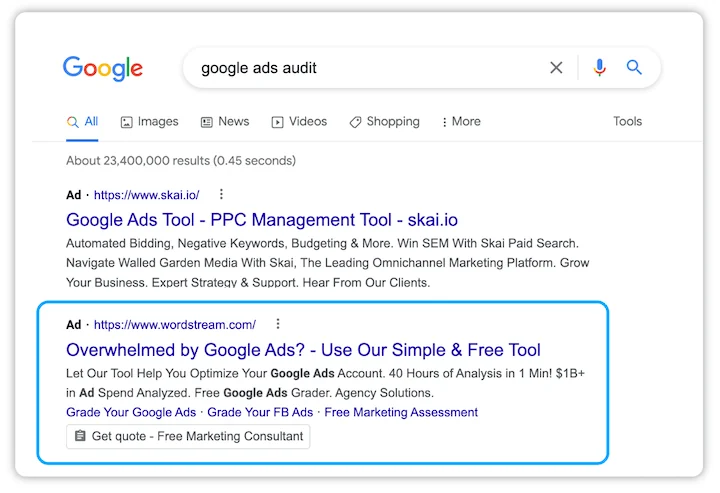
The trade-off from the draw: PPC gives instant placement in paid ads, but that visibility disappears when the spending stops. Speed and control. Google Ads also offers granular targeting (location, device, audience, time of day) and fully measurable, real-time ROI. But the catch is that its a rented audience, turn off the budget and the leads turn off with it. webfx
Google Ads vs SEO: Quick Overview of the Differences
| Parameter | SEO (Natural) | Google Ads (PPC) |
|---|---|---|
| Rate of results | 3 to 6+ months slow build-up | Instant within days of release |
| Cost modelling | No cost per click Invest in content & optimisation | Pay-per-click |
| “sustainability” | Lasts long; keeps working when work stops | Stops when the budget stops |
| Element of trust | High — users trust organic results | Lower — users know it’s an ad |
| Targeting » | Content relevance and keyword intent | Granular: location, audience, device, time of day |
| ROI over a period of time | The cost per lead falls after one year | Consistent, though always ongoing |
| Best suited for | Long-term sustainable development | Fast wins & timely offers |
Pros and Cons of Small Business SEO
SEO is the basis for long-term success on the Internet. If you can be patient and want to lower your cost per lead in the long run, that’s great.
Benefits
- No cost per click – traffic is effectively “free” when you rank
- Builds trust and brand authority (people trust organic results )
- Compounding returns: The longer you invest, the cheaper each lead becomes
- Works 24/7, even in AI search results
Cons
- Takes months to get real traffic
- Requires ongoing technical and content work
- Rankings can change as algorithms change.
- More difficult to attribute results directly in the short term
Google Ads for small businesses: Advantages and disadvantages
Google Ads is your accelerator. It’s great if you need leads now, or are launching something new, or want to test a market before committing to a long content strategy.
Benefits
- Immediate visibility on the top of the search
- Trackable, fully measurable ROI
- Accurate targeting and budget control
- Great for quickly testing offers, keywords, and landing pages
Advantages
- You pay for each click and costs are increasing
- The second you stop spending, the traffic disappears
- Competitive keywords can cost a lot
- Requires constant attention to remain profitable
How much will they cost in 2026?
This is where a lot of small businesses get blindsided. On the paid side, average cost per click across Google and Microsoft Ads is around $5.42 in 2026 — more than twice what it was a decade ago. The average cost per lead is about 66-70. The average conversion rate is just over 8%. High-competition niches are much more expensive – legal services, for example, run well over $8 per click on average. For most small businesses, a realistic Google Ads budget is typically between $200 and $2,000 a month. cpl drops for first time since 2020 google ads cpc up 5 42 +5
Here’s the maths. If you’re paying $70 a lead and only 1 out of 5 leads turns into a customer, then you’re paying about $350 to get a single customer – every month forever. Which can be perfectly profitable for high-value services. But it never becomes cheaper.
SEO reverses that equation. Instead of paying per click, you pay a fixed monthly investment (content, optimisation, links). You may not see much in the first few months, but as rankings build, your effective cost per lead keeps dropping. SEO is a better long term investment and the cost per lead is lower after year one. Simply put, Google Ads is a tap you keep paying for to keep running; SEO is a well you dig once and draw from for years. new media
Which One Should You Invest In First?
There isn’t one size that fits all winner — what is the right first move depends on your situation. Use this template:
Begin with Google Ads when…
- You need leads or sales in the next 30-90 days
- You’re launching a new product, service or location
- You’ve got a season or time-sensitive offer or push
- You want to test what keywords and messages actually convert before investing in content
- You have the cushion to absorb continued ad spend
Do SEO if…
- You’re building for the long term and can wait a couple of months
- Your industry has pricey clicks, so PPC is hard to budget
- You want to create lasting brand authority and trust
- You want to reduce your reliance on paid traffic over time
- You’re creating content that can also drive visibility for AI search
If you can do both, do both
If your budget can stretch to even a small split, running them together is almost invariably better than running either alone – and here’s why.
Why the Smartest Play Is Often Both
SEO and Google Ads are teammates, not competitors. Many companies use both for a balance of results—PPC to get traffic right away, and SEO to grow over the long term. Businessman
Together, they compound to form an advantage:
- PPC data fuels your SEO. Your ad campaigns tell you exactly what keywords convert – so you can build organic content around proven winners, not guesswork.
- SEO lowers your paid dependency over time. As organic rankings improve, you can reduce spend on terms you now own for free.
- You own the entire results page. Being visible in paid, organic and AI results builds trust and crowds out competitors.
This full-funnel approach — paid for speed, organic for staying power — is how small businesses get quick wins and lasting growth from the same budget.
How a BDS Digital Marketing Agency Can Help
At BDS Digital Marketing Agency we have SEO and Google Ads under one roof, so you don’t have to choose between fast results and long-term growth – we build a plan that uses both to your advantage. We’re all about full-funnel, AI-era search: ranking you in organic results and the AI answers more customers now rely on, while paid campaigns bring leads in from day one. Managed plans start at $199/month so growth is possible even with a small budget.
Frequently Asked Questions
Is SEO or Google Ads Best for Small Business?
Neither is better all around. Google Ads wins on speed and is best for immediate leads, while SEO wins on long-term, lower-cost growth. Usually the best results are from combining them.
How long does SEO take to work?
SEO takes 3-6 months to show meaningful results for most businesses and continues to build on that over time. Competitive industries might take longer.
How much should a small business spend on Google Ads?
Most small businesses spend between $200 and $2,000 per month on Google Ads. The right number depends on your industry’s cost per click and the value of each customer.
Yes, you can do SEO and Google Ads at the same time on a small budget.
Yes. Even a simple split works well — use Google Ads to generate leads and keyword data now, then invest in SEO to lower your cost per lead over time.
Is SEO Still Relevant in the Modern Age of AI Search?
More than any other time. Strong SEO content is precisely what is cited in Google’s AI Overviews, ChatGPT and other AI answers, so optimising well now gives you visibility in both traditional search and AI search.
SEO vs PPC – Which Offers Better ROI?
PPC provides quicker, very measurable ROI but SEO tends to generate a larger return overall as your cost per lead decreases as your rankings improve.
Bottom Line
If you need customers this month, begin with Google Ads. If you’re building for the next few years, start with SEO. But if you want both quick wins and lasting growth — which most small businesses want — the answer to Google Ads vs SEO isn’t “either.” It’s “both, in the right order, for your budget.”
Nail that mix, and you stop renting your audience and start owning it.
👉 Ready to start working on your plan? Contact BDS Digital Marketing Agency for a free, no pressure strategy session.